
Implantology / Oral Surgery in Lucerne
Modern implantology and oral surgery for sustainable dental health and a natural smile.
Dental implants at our dental practice in Lucerne
Dental problems and gaps in your teeth can be not only physically but also psychologically burdensome. The constant worry while eating or speaking, and the potential for related health issues, can significantly impact your well-being. However, modern dentistry at our dental practice in Lucerne offers an effective solution: dental implants. These can not only resolve your dental problems but also restore a piece of your quality of life that you may have been missing for a long time. Here, we would like to provide you with comprehensive information about all aspects of dental implants. We will dispel myths and explain the costs and the procedure.
What are dental implants?
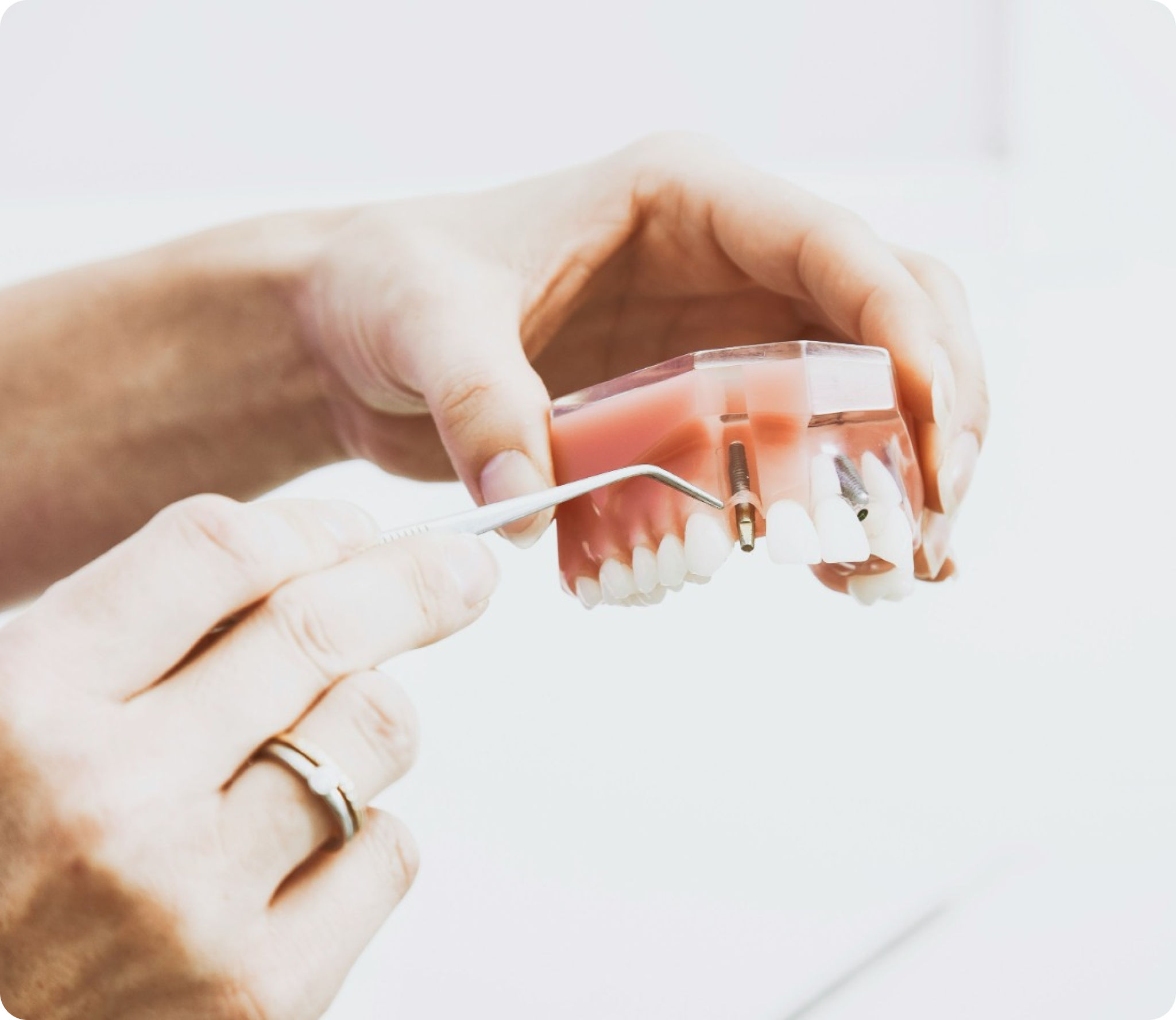
Dental implants are artificial tooth roots that are inserted into the jawbone to replace missing teeth. They are typically made of titanium or other biocompatible materials such as ceramic and serve as a stable base for dental prostheses. Dental implants can offer a permanent solution for tooth loss by functionally and aesthetically mimicking natural teeth. They can help restore your smile, normal chewing and speaking function, and reduce the risk of bone loss in the jaw.
When are dental implants used?
The ideal time for dental implants varies depending on individual circumstances and cannot be generally defined. However, it’s important to know that waiting too long increases the risk of bone loss, as the jawbone can recede at the site of the missing tooth without the pressure of chewing. This means dental implants are always an option when a tooth is beyond saving or when a gap has persisted for an extended period.
What is the typical procedure for dental implants?
Quick overview – Procedure – Dental implant
Advice
Open questions will be answered, and fears and concerns will be taken seriously.
Preliminary investigations
Teeth, jaw condition and jawbone are examined.
Pretreatments
Tooth decay and inflamed gums are treated; if necessary, bone grafting is performed.
Dental implant implantation
The dental implant is inserted into the jawbone under local anesthesia.
New smile
After the implantation, you will receive a temporary dental prosthesis and can go home.
Consultation
Before having new teeth implanted, you can schedule a free, no-obligation consultation at our dental practice in Lucerne. We will explain the implantation procedure to you in detail, answer all your questions, and address any concerns or anxieties you may have. If you decide to get a dental implant, we will conduct thorough preliminary examinations.
What preliminary examinations are necessary?
During the preliminary examinations, we examine your teeth, the condition of your jaw, and analyze the structure of your jawbone using precise X-rays so that we can create the ideal starting situation for your dental implant.
Why are pretreatments necessary?
It may be necessary to treat cavities, inflamed gums, or tooth roots before the actual implantation. In some cases, bone grafting may also be required. All these preliminary treatments create the ideal conditions for your dental implant.
How is a dental implant placed?
Once the optimal foundation for your dental implant has been created, we proceed with the planning and placement of the implant. The actual implantation of the fixed prosthesis is performed under local anesthesia. General anesthesia is not necessary for this procedure, but can be considered for patients with dental anxiety. Through a small incision, the jawbone is exposed, the implant screw is precisely inserted into the jawbone, and the temporary prosthesis is attached, allowing you to go home with a smile immediately after the procedure.
Is the insertion of dental implants painful?
Rest assured, your well-being is our top priority, and we want to make your experience as pleasant as possible. In most cases, the procedure is completely painless and is performed under local anesthesia. If you prefer, we also offer the option of general anesthesia. Our experienced oral surgeons use gentle, scar-minimizing techniques.
What should you be aware of after receiving dental implants?
After your dental implant has been placed, it is important to get plenty of rest and avoid strenuous activity and sports. If you notice slight bleeding, you can stop it with a cotton swab. If you experience persistent discomfort, please contact our Lucerne practice at any time. We are here for you. To reduce any swelling, you can use cool packs. For the first few days, try to eat mostly soft foods. When brushing your teeth, avoid the implant area to prevent injury or irritation. This also applies to tea, coffee, and alcohol. By following these simple measures, you will support successful healing without complications.
What materials can a dental implant be made of?
Dental implants can be made from two main materials: titanium and ceramic. Titanium, as a robust metal, is a popular choice for dental implants. Its excellent properties, such as extreme durability, corrosion resistance, and biocompatibility, make it a reliable option. Titanium is generally well-tolerated by the body, which is crucial for successful implant integration. Ceramic is another popular choice for dental implants. It is valued for its natural aesthetics and also offers high biocompatibility and durability. The decision for the right implant depends on various factors, including your individual needs, aesthetic preferences, and any potential allergies. We are happy to support and advise you in selecting the right implant.
How much do dental implants cost at our dental practice in Lucerne?
At our dental practice in Lucerne, your well-being and satisfaction are our top priority. In addition to providing first-class treatment, we place great importance on cost transparency. Please note that costs can vary depending on your individual case, but we will gladly provide you with a detailed cost estimate after a thorough examination.
Here are some examples of the costs of common treatments:
- Single tooth implant without bone grafting with ceramic crown: CHF 3,500 to 5,500
- Two implants with two crowns: CHF 8,000 to 9,000
- Bone grafting or sinus lift: CHF 700 to 3,000
We are happy to provide you with further information on costs and payment options, as well as personal advice.
Arrange a free consultation appointmentWhat alternatives to dental implants can we offer?
Of course, we also offer alternative treatment options to dental implants. These include bridges, partial and complete dentures, and orthodontic options.
Our experienced specialists will be happy to take the time to advise you in detail. Together, we will discuss the various options and find the best solution for your needs.
Bridges are a proven method for bridging gaps. Artificial teeth are attached to the adjacent teeth to close the gap.
Partial and complete dentures can be a solution for patients with several missing teeth or a completely edentulous jaw. Depending on the individual situation, either partial dentures are used if some natural teeth remain, or complete dentures, which cover the entire dental arch.
Sometimes, orthodontic treatment can also be considered to correct misaligned teeth and realign the dental arches. This can reduce the need for implants in some cases.
How long does it take for a dental implant to heal?
The time required for implant placement varies depending on individual circumstances. Every mouth is unique, and therefore the implantation time differs. At our dental practice in Lucerne, our experienced oral surgeons typically need about 15 minutes to place a single implant. If multiple implants are required, the entire procedure can take approximately 45-60 minutes.
To prevent inflammation, it is important that you take good care of your dental prosthesis. Bacteria can accumulate at the implant abutment and cause gum inflammation. This can lead to a serious infection. Early treatment is crucial to prevent implant loss. Therefore, don’t forget to maintain your regular oral hygiene routine and attend your check-up appointments at our dental practice in Lucerne
Use a soft to medium toothbrush: Use a soft to medium toothbrush to clean your teeth and implants.
Brush your teeth regularly: Brush your teeth and implants at least twice a day with fluoride toothpaste. This removes plaque and helps prevent cavities.
Clean between your teeth: Use dental floss or interdental brushes to remove food particles between your teeth and implants. This helps prevent inflammation.
Use a special mouthwash: A mouthwash can help reduce bacteria in your mouth and prevent inflammation.
Regular visits to a Lifedent practice: Visit your dentist regularly for checkups and professional cleanings. This will keep your dental implants healthy and clean.
Healthy diet: A balanced diet is important for maintaining the health of your teeth, gums, and jawbone, in which your dental implant(s) are embedded. Avoid excessive sugar consumption.
Pay attention to warning signs: If you notice sudden pain, swelling, or a loose implant, it’s advisable to contact your dentist immediately. Acting early can help resolve potential problems before they worsen.
How long do dental implants last? On average, a dental implant lasts about 15 to 20 years. Regular dental checkups are essential for proper dental and implant care. Dental implants can typically last a lifetime if well cared for and undamaged. Their lifespan can also be affected by an unhealthy lifestyle, such as smoking.
On average, a dental implant lasts about 15 to 20 years. Regular visits to the dentist and dental hygienist are essential for proper dental and implant care. Dental implants can typically last a lifetime if they are well cared for and remain undamaged. Their lifespan can also be affected by an unhealthy lifestyle, such as smoking.
Guided surgery in dentistry refers to a procedure in which implants are precisely positioned using 3D-printed or milled surgical guides.
These guides serve as guides or navigation tools during the surgical procedure to ensure accurate implant placement. This results in improved accuracy, less invasiveness, and consequently, better long-term outcomes.
Advantages of Guided Surgery in Dentistry:
- Precise implant positioning
- Reduced invasiveness and tissue trauma
- Predictable planning and outcomes
- Shorter surgery times
- Improved postoperative healing and patient comfort
Small incisions, fast healing, no pain.
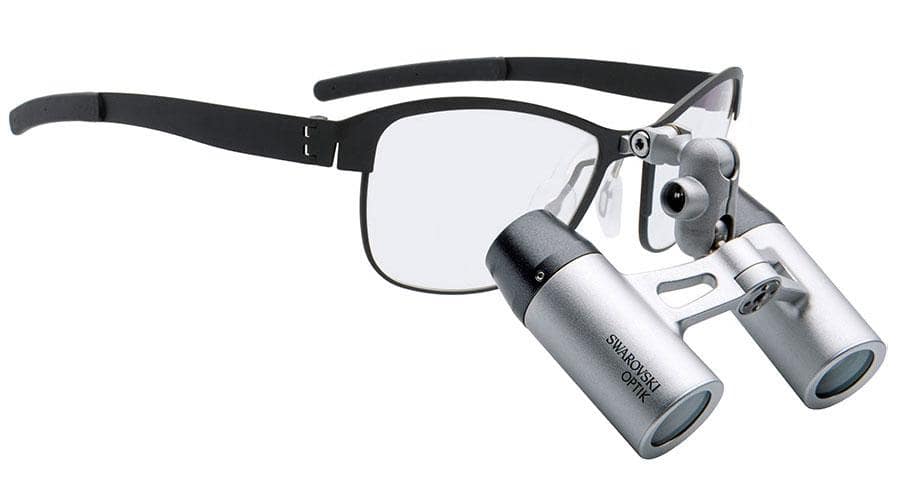
Microsurgery in dentistry offers improved visibility, precision, and gentler treatment options compared to traditional surgery. This allows for smaller incisions in the surgical area, resulting in faster healing, less postoperative swelling, and reduced discomfort for patients.
Treatments are performed using 6x to 24x magnification (loupes, surgical microscope), depending on the type of procedure.
Microsues are used to close the wounds; these are barely visible to the naked eye.